



The gods of most nations claim to have created the world. The Olympians make no such claim. The most they ever did was to conquer it. […] It is nevertheless true that the Olympian Religion is only to the full intelligible and admirable if we realize it as a superb and baffled endeavour, not a telos or completion but a movement and effort of life.
—Gilbert Murray, Five Stages of Greek Religion (1926)1
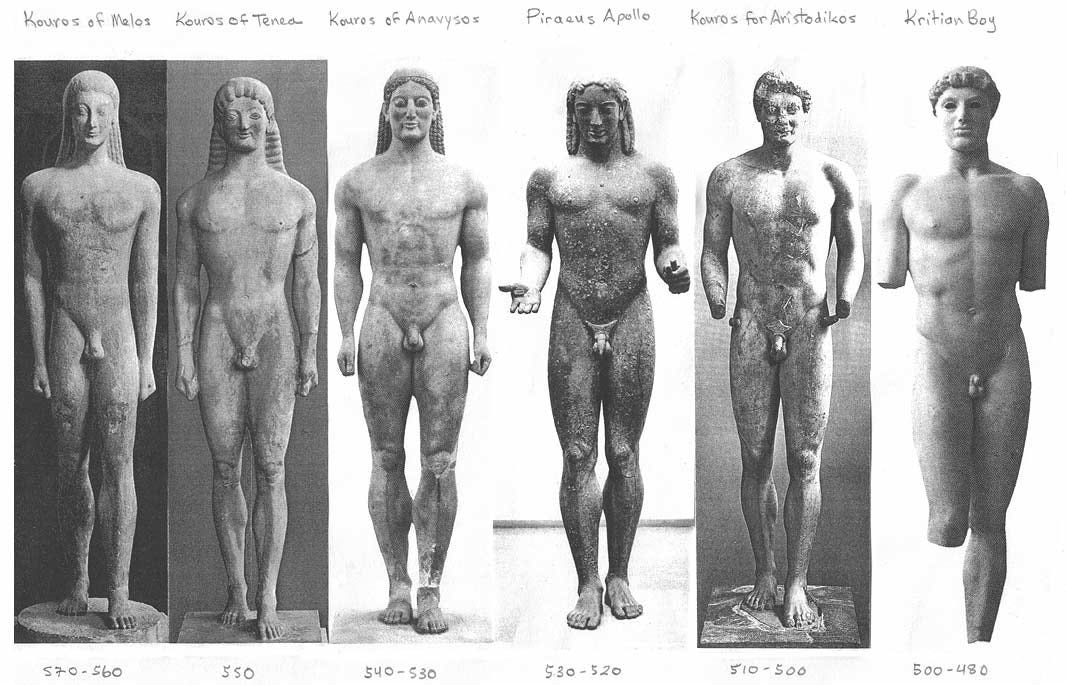
“Only Heraclitus dares the extreme criticism of cults and gods,” said the great philologist Wilamowitz, “In Athens, his criticism of the cults would have been persecuted as impiety, and perhaps he wasn’t safe from that in Ephesus either.”2 A nod to the trial of Socrates that would come a full century after him, Heraclitus is placed by Wilamowitz among a pantheon of pre-Socratic Aufklärer3 with Xenophanes, Parmenides, and others: men who could illuminate and see through the superstition and folly of established religion, which was to be contrasted utterly with the purifying light of reason and nature. Indeed, while it is fashionable to attribute a certain “virtuous” monotheistic—or rather atheistic—tendency to the Socratics and onward, it is in fact much earlier that we see the many distortions, reforms, and criticisms of Greek religion spurred by such an overwhelming sense of religious anxiety.
What qualities of religious belief and life did these men take up arms against? The contradiction of personal yet cruelly indifferent anthropomorphic deities, incongruence of rites and superstition with the rational observance of nature, and the incompatibility of old beliefs with new social orders. Perhaps these Aufklärer were not too different than the ones that would come against the Christian religious system a millennium later! Heraclitus mocked the purificatory rites in which one is cleansed by anointing himself in pig’s blood, as did Orestes in the Temple of Apollo to purify himself of the miasma of matricide, towards which Heraclitus scoffs “just as if one who had stepped into the mud were to wash his feet in mud”4. Likewise, in the same fragment, his criticism of the mere commonplace worship of “images”, “not knowing what the gods and heroes really are”, could be taken to be a remarkably impious attack. Parmenides, in suite, offers what is admittedly an exceptionally rich catalogue of works which critique established religious views, such as that of creation and generation found in Anaximander and Hesiod. Yet it is Xenophanes who is most explicit in his critique, and to whom he levels the charge in saying, “Both Homer and Hesiod have ascribed to the gods all deeds which among men are matters of reproach and blame: thieving, adultery, and deceiving one another.”5 … “mortals suppose that the gods are born, have human clothing, and voice, and bodily form.”6
Evidently, it is particularly the religion and poetic illustration of the gods of Homer that these men took great issue with. Homer was of course, by this time, the “First Teacher” of the educated Greek, from whose works a great amount of religious, ethical, and practical instruction was derived—perhaps in the same fashion we derive from Plato today. If one wished to critique the core of Greek religion in these days, it would be marble pillar of Homer who would bear the brunt of the assault. Of course, it is declared now (according to some popular academic theories) that “Homer” was merely the Homeridae, a number of different poets taking part in an even larger oral tradition, within which a countless number of religious evolutions may be alluded to. We leave this so-called “Homeric Question” aside for others, as in either case, our conclusion is the same: what the pre-Socratics were responding to was, by their time, the established worldview and religious system of the Greeks.
As a result of so much of our beliefs descending from the Greek spirit, even some 2,700 years later or so, this conception remains as our default worldview and religious system. While it is not possible to claim that Homer invented wholesale the idea of the anthropomorphic deity—evidence for this in Greece and the larger Mediterranean culture can be found back as far as 1500BC7, and likely even further—we can be sure that Homer’s vivid personal interactions between man and the divine, seen as two distinct categories of persons, found a well-received popularity in the later theology of a Hellenized Israel and, soon later, the Christian Church. The Christian God is, of course, a person—or more accurately, three of them in one self-existing ουσία8. Thus the fundamentally Homeric character of Yahweh is plainly understood, but we can go further still! He reigns as monarch over a sprawling pantheon of gods, daimons, and divinities, even after the god-denying impetus of Christianity demoted all of them into the categories of angels and demons. The physical body of God is illustrated with clear and lively animation: he “walks” in the Garden, “smells” the pleasing aroma of sacrifices, power is given to his chosen with the “laying on of his hands”, he “outstretches his arm”, “presses his finger”, “marches” and “tramples” over the impious and idolatrous. Perhaps we would be quick to brush these off as poetic devices, yet, precisely the same could be said of Homer, who has not been given such a charitable room for an unspoken rich theology. Why only Homer is taken at face value and the Christian God decorated with so many theological decorations and evolutions, perhaps, would be best left aside for now.
The area where God’s undeniably Homeric quality is most intuitively preserved today is in his personality. Any Christian who emphasizes his “personal relationship with Christ” can immediately verify for himself the nature of this understanding: God is capable of the full array of human emotions, contained perfectly within his own essence and, more importantly, typically directs these emotions towards a particular human subject. He is “a jealous God”, who enviously claims mankind’s exclusive adoration and worship, he rejoices with his creation, enacts wrathful vengeance and justice against the sinner and against evil itself, and above any other emotion, God forgives and loves. Here, we are met with a glaring double standard. When it came to Homer, the strikingly “anthropopathic” emotions and behaviors of the gods were met with the fiercest criticisms and recoils, such to the extent that even modern classicists consider Homer’s works “hardly religious”9. Yet within the Christian system, we universally understand this ability to link man with the divine and vice versa through fundamentally human emotions and interactions as the most compelling individual component of the whole of the religion—of any religion! It is this quality which drives into existence great works such as the 51st Psalm, and later, Bach’s Erbarme dich, mein Gott. This we happily concede, under one condition: that we also accept this conception to not belong to the Church Fathers and Apostles, but most forcefully, to Homer!
Yet this conception, which now so utterly defines our beliefs and “personal relationship” with divinity, has not come without its incurred debts. In fact, we shall witness here that this development in human consciousness and religious thinking has shown itself to be one of the more mortal wounds inflicted upon the concept of religion in the history of man. We identify three principle problems at hand, which can be seen to be taking, at least, their zygotic form in Homer: the abandonment of natural religion, the attribution of human ego to the divine, and the birth of the problem of evil. Any one of these contaminations would prove problematic for the religious indeed, yet all three in conjunction with one another at once has proved to be a fatal concoction. A religious man may find comfort in faith when scientific evidence reproaches scripture, perhaps he could rely on a trust in the loving Almighty when evil comes his way. But when met with a notion of divinity that is, at once, incongruent with nature, and a personal being who is in some way responsible for his suffering, the result can only be: the death of God.
“The first man is of the Earth; the second man from Heaven,” we are told by Paul10. We may derive much implicit commentary from such a proclamation about the nature of Christian redemption, to what extent we may consider this “dualism”, “world-rejection”, or any such colloquialism. Yet the more direct mythological interpretation is far more appealing for our investigation: man originally belonged to the Earth, and now he belongs to the divine; loftier, mightier, and more beautiful than mere brush and dust. What Paul provides is a positive value-judgement of the religious evolution of mankind, ultimately fulfilled by Christ. Homer, we must continue, was undeniably instrumental in this evolution from a natural religion to a more “spiritual” form.
While we opt here for a simple and intuitive use of “natural religion”, which has applications elsewhere, it may be considered synonymous to the many other attempts to illustrate the original religious content of mankind: Urreligion, Urdummheit, Hetaerism, primitive religion, the Dreamtime, shamanism, totemism, animism, and so forth. Each of these describe the same fundamentally irrational, or rather pre-conscious, expression of religious beliefs and actions, which are fully and irrevocably immanent with the immediate world of the practitioner. If the heightened mental capacity of mankind—which not only elevates him above nature but also therefore allows him to postulate greatly technical and poetic conceptions of myth and belief—is an evolutionary accruement from his distant ancestral past, then we must conclude that the original flashes of religious thought, bubbling like the sea-foam of Proteus, were fully nestled in “the womb of the Mater”—matter, nature. Here we must think in terms of the “religion” of extinct hominids, the Orang, the wandering bird, and even the most fleeting and futile of bacterial existence: rational devices, “reasoning one’s way to God”, are flatly impossible in irrational species. Unless we wish to declare—and many people do engage in this folly—that at some point in time a bolt of lightning struck this corpse of man and gave him new life, and with it the sum of his capacity for reason and religion, then we are left with something uncomfortably primitive—something un-human!—the complete antithesis to the anthropomorphic and man-loving deity. Far removed are we from the illustrations of Homer, not even to speak of the later Christian understanding.
We may evidence the conception of natural religion as the default religious orientation of mankind with a number of facts, beginning with the nature of experience. While the facts of self-consciousness may be considered intrinsic to the human condition, we cannot say the same of experience generally for the whole of biological life. Here we define experience as it was originally understood: the taking-in of external phenomena as they are immediately sensed.11 The ability to experience is perhaps the key distinction between organic and inorganic, more essential to the distinction than the “capacity for self-replication”, and certainly moreso than the capacity for consciousness. The invisible and fleeting amoeboid, knowing nothing of its “self”, nevertheless responds to external phenomena with immediate and almost supra-intelligent capacity.12 Likewise, when man himself is sound asleep and his capacity for reason and self-recognition dead in the night, he still responds to an ill-fitting blanket, a loud noise outdoors, and sometimes even walks about! We leave discussions pertaining to the ego and self-consciousness for the following chapter, but with this evidence stick to the following conclusion: any need to “make sense” of the world, in however primitive or sub-conscious of a fashion, begins with the ingestion and reaction to external phenomena, of things immediately experienced—and this is to be the key point—not with the self. In a close approximation the concept, we may cite Aquinas: “Nihil est in intellectu quod non sit prius in sensu.”13 However, for Aquinas, this so-called Peripatetic Axiom is intended to serve as a rational defense of the intellect itself. Interestingly, it relies on the self-evident fact of experience for a grounding which it cannot provide for itself! We may therefore stick with the minor correction since provided by the field of evolution: “Nihil est in homine quod non prius in amoeba erat.”14
Thus, in the most distant reaches of primitive religion, the religious symbols and objects of man all invariably pertain to his immediate ecological condition, what is available to his perception and reaction. The divine is always to be found in the natural phenomena: the howling wind, a bolt of lightning, local disease, the bush, and, most principally, animals—though primitive man was certainly capable of ascribing a “soul” to anything which was animated at all, extending well beyond mere organic life. But to go the necessary further step, the divine was to be found in ecological realities available to him. The Polynesian relates vivid imagery of destruction and creation to the cycles so generously shown to him by the innumerable volcanic islands of the region, the Greek associates wisdom with the endemic little owl Athene noctua; in the negative, if we were to happen upon a subterranean people that worshipped the Moon, we would conclude their religion to be far more ancient of an import than their current condition! Even as late of a thinker of Oswald Spengler, to rudely skip ahead some dozens of centuries, shows a remarkable capacity for this Heathen-born insight in his illustrations of the Germanic soul as a reflection of the cold, dark, lonely, and infinitely vast forests of northern Europe: “longing for the woods; the mysterious compassion, the ineffable sense of forsakenness. […] the rustle of the woods, a charm that no Classical poet ever felt, stands with its secret questions—whence, whither?”15
Here, we can find little evidence of “the beyond”, a world somewhere in the distance, inaccessible to life. The lack of a Heaven or a Valhalla, however, need not exclude natural religion from religion as such—it is simply so far removed from our contemporary understanding of what religion is that it is tempting to identify it as something else, or rather, nothing at all. Belief in the divine in primitive man, if we are even to call it belief, has little to do with the modern Platonic-Cartesian solution where one carries within his head the idea of God, who’s seat not only beyond this world, but actually inaccessible to the living:
And once he heard a raging crowd,
Howl through the streets, and clamor loud
That somewhere existed a God behind
Man's foolish forehead in his mind.
And that He was greater and loftier too,
Than the breadth and the depth of the gods he knew.16
The nature of divine forces and beings for primitive man belonged to a category of, as termed by E.B. Tylor, “vaporous materiality”.17 The contradictory phrasing highlights the apparent contradiction, though it should be a familiar one, as witnessed by the eyes of the colonial missionary: the whole of reality is both fully immanent and fully divine. Man himself is an aethereal ghost which can be, at the same time, sensed, touched, and indeed killed—as are the beasts, storms, deserts, clouds, stars, and forests around him. Crucially, this belief is not a mere catalogue of symbols with “deeper meanings”—man the animal knows nothing of the sort—nor are they poetic devices. When the African chieftain, as we are told in a contemporary anecdote by Klages18, retires from the company of anthropologists because he has been overcome by a migraine induced by the angry spirit of his veneration-neglected ancestor, he is not engaging in literary wit: the tempestuous spirit of his deceased father has literally made an assault on his bodily senses, inflicting physical pain. Perhaps this is not too foreign to us today, as our ghosts come with the shadowy faces and bodies they once knew, wearing clothes, bearing weapons, emitting light, drawing in heat, and so forth. Even where the intellect fails and terror fills its void, the ability of bodily sense to comprehend prevails.
How might the Great Poet compare to such a view of the world? Surely, we would be completely foolish to call him a dualist, and the river-soul of the Scamander is just as able to inflict bodily harm on Achilles as the ancestor of the tribal chieftain was to his heir. In cases such as these, the primitive belief in a genius loci is clearly preserved. Yet the departure is perhaps most evident in the fact that the Olympians no longer are tied to a specific place or particular essence. The gods may appear at any place or condition of their choosing, and engage in an almost revelrous utilization of disguises. The throne of Zeus is of course on Mount Olympus, but he is just as capable of patiently observing the Trojan War atop his temple on Mount Ida. Apollo “strode down from Olympus’ peaks, like night”19 and Athena was likewise “sent down from heaven [ουρανοθεη]” by Hera.20 The key development in religious thought as exemplified by Homer is that the divinity is no longer equated in exact identity with the “fetishistic” object. Poseidon may be associated with the sea, but he is not the sea itself, nor is Hades the precise identity of death, Dionysus that of madness. These things come with the god, and are not to be confused with the gods themselves. Had the Achelous suddenly dried up into cracked mud, the Greek would’ve surely been terribly distraught by the omen, and he would’ve inquired into the cause through rites and prayers to the river-god Achelous himself. But never would the Homeric Greek have concluded that the dead river came about from the death of the god himself, for among many reasons, he principally did not consider them to be identical beings.
However, it must be noted that in Homer the process of divorcing the divinity from its associations is an act very much still in progress, and there are places, aside from what has already been alluded to, where the deity and its fruits are one in the same. In Agamemnon’s apology in Book 19, the proud king declares that it was not he that was at fault for his transgression against Achilles, but the daughter of Zeus:
It is not I who am at fault, but Zeus and Fate and Erinys, that walks in darkness, since in the place of assembly they cast on my mind fierce blindness [atē] on that day when on my own authority I took from Achilles his prize. But what could I do? It is a god that brings all things to their end. Eldest daughter of Zeus is Ate who blinds all— accursed one; delicate are her feet, for it is not the ground that she touches, but she walks over the heads of men, bringing men to harm, and this one or that she ensnares.21
In this text, it is difficult to discern the extent to which the poet believes or intends to illustrate the goddess Ate from her effect of atē on men, and in more ways than the identical words denoting them. On one hand, Homer provides (and continues to provide as the book progresses) a typical Hesoid-esque genealogy and mythology of Ate the light-footed woman, the quarrelsome daughter of Zeus. On the other hand, atē is the resulting psychological alteration—delusion and blindness—which always comes with the goddess, though, interestingly, not always from the goddess. In some instances, such as in the apology, atē is found when the goddess herself is present. The Odyssey speaks of “the atē which the hard-hitting goddess Erinys laid upon the understanding of Melampus,” and elsewhere we may find Zeus being blamed as a responsible agent of atē with no goddess being spoken of.22 In either case, we can see the faintest glimmer of something far more ancient than Homer, in that he breaks with the Classical depiction of gods as distinct from their associations, even in a dialogue where he illustrates the Classical understanding for us! In the case of man, we are accustomed to names being derived from our skills and the trades of long-departed ancestors, and perhaps our method of naming the gods is not too dissimilar; only here, it is the trade that precedes the tradesman, and not vice versa!
The connection of Erinys with moira is still attested by Aeschylus, though the moirai have now become quasi-personal; and the Erinyes are still for Aeschylus dispensers of atē, although both they and it have been moralized. It rather looks as if the complex moira-Erinys-atē had deep roots, and might well be older than the ascription of atē to the agency of Zeus. In that connection it is worth recalling that Erinys and aisa (which is synonymous with moira) go back to what is perhaps the oldest known form of Hellenic speech, the Arcado-Cypriot dialect. […]
I think we should not dismiss these statements as "poetic invention" or "divine machinery." No doubt the particular instances are often invented by the poet for the convenience of his plot; and certainly the psychic intervention is sometimes linked with a physical one, or with a scene on Olympus. But we can be pretty sure that the underlying idea was not invented by any poet, and that it is older than the conception of anthropomorphic gods physically and visibly taking part in a battle. The temporary possession of a heightened menos is, like atē, an abnormal state which demands a supernormal explanation.23
Homer and the religious current he represents must be forgiven to the extent that he splits the divine from its objects and effects, for it does, in a sense, “elevate” religious capacities and feelings to a new form while retaining much of its original character. Admittedly, it can be difficult to worship a mere river—not because we implicitly accept that the river must necessarily lack divine character, but because there is nothing personal about the river. Indeed, all that we know of great religious feeling comes from the ability to relate to and comprehend divinity, thus all religious acts today stem from the efforts of cultivating either reason or relationship. But it is not the actual essence of religion, otherwise, we would find it widespread and central to the expression of natural religion, and we do not. Thus, the roadblock into a proper phenomenological investigation into the fundamental essence of religion and religious experience, if it is to be taken at all, is not symbolized by Socrates, but Homer! The whole sensual array of “man’s relationship with the divine” is detailed explicitly in the terms of Homeric poetry, which must be recognized as a departure from its most remote ancestors.
This brings us to the second development of religious expression as seen through Homer, which begins to bear discernable consequences beyond what is found simply in a departure from “primitive” religion: the attribution of personality to gods. We must reiterate the same caveat attached to all earlier points that Homer cannot be exactly blamed for initiating a world-historical movement, though his inescapable influence has certainly contributed to its momentum and lasting effects. The ancient Germanics, who we assume for much of their history had little care for Homeric poetry, certainly had no issue illustrating their gods as super-men who descend and depart along with their objects and associations, just as the gods of Homer did. Too, we see the anthropomorphic strain greatly intensified by the time we reach the Eddaic poetry and sagas of the Scandinavians, and can safely assume that much of this development occurred independent of Homer.
Nevertheless, Homer does indeed express a sort of antipathy towards the “primitive”, opting for a far more ennobling, more beautiful, more human conception of divinity. One anecdote that may serve as evidence of this is the curiously limited role of Hermes in the Iliad; it is not until the final 2 books of the work until he is even mentioned, and his character is something like a subservient adolescent boy under the thumb of Zeus. Even his well-understood role as “Messenger of the Gods” is overruled; it is the rainbow-goddess Iris who instead takes on this role.24 Even when Hermes is instructed by Zeus to guide Priam through the Greek camp to the tent of Achilles, it is in fact Iris who is first sent into Troy with the message of Zeus regarding instructions of how Priam is to do so.25 Only Hermes’ role as a psychopompós—a messenger not for the gods, but a guide for the dead—is preserved in Homer.
The classicist Gilbert Murray, for whom Dodds as a pupil, offered a plausible explanation for the fact—and it comes with the charge against Homer as that of a bowdlerizer. Hermes, in his original Pelasgian form, was the herm: a large stone erected from the Earth bearing only a phallic inscription, and an optional human head. The herm was placed over the tombs and burial mounds of ancestors, where it may serve as the guide-pole for the dead, a boundary between worlds, and the totem of the Agathodaimon. It thus too bore a striking similarity to the Etruscan practice of placing phallic cippi upon tombs: here, the mythic relation between sexual fertility and the underworld, of death and Eros, may serve to gently illuminate that phrasing of Heraclitus which so frustrated Wilamowitz: “Hades and Dionysus are the same”26. But in the case of the Classical Greeks and Homer, they found no such ennobling symbolism in these erect totem poles about the landscape, leaving these Mysteries to the silent and secluded halls of the Telesterion. Evidently, the revulsion towards these relatively ancient totem poles lasted centuries later. A fable of Aesop makes light of a dog marking himself upon the statue, and it was upon the departure of Alcibiades for his Sicilian Expedition when a number of hermai in Athens were desecrated and vandalized, leading to the accusation of impiety against him in absentia. The evidence points us to the consideration of an elite disgust towards the primitive fetishism that surrounded the placement and veneration of hermai as seen in the common Pelasgian folk, thus, it was to be sanitized into Hermes, who utterly lacks any such “phallic” character. As Murray elaborates:
Now this phallic stone post was quite unsuitable to Homer. It was not decent; it was not quite human; and every personage in Homer has to be both. In the Iliad Hermes is simply removed, and a beautiful creation or tradition, Iris, the rainbow-goddess, takes his place as the messenger from heaven to earth. In the Odyssey he is admitted, but so changed and castigated that no one would recognize the old Herm in the beautiful and gracious youth who performs the gods' messages. I can only detect in his language one possible trace of his old Pelasgian character.
Pausanias knew who worked the transformation. In speaking of Hermes among the other 'Workers', who were 'pillars in square form', he says, 'As to Hermes, the poems of Homer have given currency to the report that he is a servant of Zeus and leads down the spirits of the departed to Hades'. In the magic papyri Hermes returns to something of his old functions; he is scarcely to be distinguished from the Agathos Daimon. But thanks to Homer he is purified of his old phallicism.27
Granted, the Greek spirit or art-form typically does not come with an aversion to phallic imagery—at least according to our standards!—thus the attributed motive to Homer may be fairly called into question. Though, as Murray points out, we may also compare the relatively sterilized “sexless Valkyrie” in Athena to the pre-Hellenic Artemis of Ephesus, from whose terrifyingly-fertile figure extrudes innumerable breasts. In either case, that Homer has participated in this elevation or perhaps sanitization of the phallic grave-herm to the boy-god Hermes seems beyond question. Moreover, Hermes has been anthropomorphized, and given a personality that was absent in the shadowy and nameless Agathodaimon. In a rejection of the more “barbaric” elements of Greek religion, Homer had sought to transform the interaction between the mundane and the divine from a shadowy mixing of snake-ancestors and river-bulls into that of a heavenly kingdom, from which rulers, law, beauty, culture, reason, and order could descend upon the cities of man. For this to be so, the Olympic gods necessarily had to become super-men, with an approachable human-like form and human-like consciousness. The ceaselessly moving bands of tribes, shifting and rising and falling without limit, came to be replaced by the rigid and defined marble form of the polis; their gods were subjected to the same process in kind.
The problem of anthropomorphism as seen in Homer can only be first understood by first taking into consideration the distinction between character and personality, as we have encountered an apparent contradiction. Did the animism of primitive man not see, in every rock and stream and constellation, something of a relatable spirit? As Jung tells us, a primitive whose “bush-soul” is that of a crocodile would think himself to be their brother, and thus safe to swim in infested rivers. Has the primitive, in this instance, not ascribed to the non-human something of a human personality by granting it a human-like soul? No—and in a way that is more fundamental than raising the possibility of the reverse, that the primitive has rather put within himself an external soul rather than projecting out his own. The primitive knew little about personality, yet much about character.
The key distinction to be found between character and personality was first and best detailed by Jung’s contemporary Klages, who provides a rough outline of the closely related concepts in Principles of Characterology (1910), which has only just recently been revived in English publication. As he reminds us, “personality” refers to the Latin personare, which in its original form referred to the theater mask, whose lifeless expression was shown to the observing crowd and animated by the voice, the soul, that spoke through. When we address one as a person or describe his personality, we understand that we are addressing an individual, an “I”, an ego, which belongs to any such being that could be said to have some communicable cognitive faculty. When we attribute to his “personality” certain “characteristics”, we may identify him as being aggressive, naïve, sensitive, honest, virtuous, or hard-headed. But the actor can simply change one mask out for another—much like the gods of Olympus—and deceive the observer by playing another role. It is for this reason that psychology—the study of the soul (ψυχή)—looks deeper than what exits the open mouth of the mask, and into the expressions of the body and the subconscious itself. Herein lies the domain of character: the expression of a living soul independent of or devoid of a self-reflecting ego. The world of the animist is devoid of ego, and thus personality, yet bursting in excess with character, and therefore life. The experience of the child shows this clearly, and sometimes it can be found in every-day language: a shadow is “cast”, a knife “bites”, his toys become “tired”, time “flies” or “drags on”; the storm rages, the desert grows, an ocean stirs, and fire dances. These are not mere poetic devices, and here we recall the same distinction for divinity, but relics of the way in which one related to the experience of life, where everything that could be sensed—organic and inorganic—expressed character, and therefore, possessed an ego-less soul. 28
Yet the gods of Homer, unlike those of the earlier Pelasgians, are clearly inflected with the additions of ego and personality. They can be angered, appeased, insulted, and impressed, just as any mortal man could himself be—they possess an anthropopathic quality in addition to simply being presented in the perfected bodies of man. Here we see inklings of the coming religious calamity in the later Christian theology of Greece, where not only do man and God bear the same “image”, but the preserved πρόσωπον29 was used to denote the “divine persons” of the Trinity, as well as the further two persons—one man and one divine—within Christ. Only in the realm of the demonic does the shadowy and formless pantheon of old find license to persist, and here the process of religious transformation is finally at its significant terminus. Whatever voice the gods once had, whatever remains of it still, must now only be heard as it is forced through the painted image-mask of mankind.
The birth of personal ego within the image of the divine initiated a revolution which could only result in its eventual destruction; a long and painful death it indeed has been. We may survey the nonbelievers of today and find many of the same criticisms of religion that were first shouted in the 5th Century, yet most principally do we find the complaint that God is a bizarrely malicious being. Though we may not reflect on it enough, the “problem of evil” as it is called, was in fact levied against the Olympians long before Epicurus, and even longer still before Yahweh was proclaimed Lord of all mankind. The formula which questions a God that is at once omniscient, omnipresent, and omnipotent is familiar, but a fourth quality in consideration of all that has been said thus far must be noted: God’s personal nature. God, much like Zeus and Apollo to the Hellenes, could be approached as a rational agent and expected to abide by the same rules. His rules are our rules, after all, and when we feel that the rules have been in some sense violated, we are overcome with the alluring sense of justified godlessness. Such a dilemma is possible only in regards to personal divinity. Murray convincingly illustrates this fourth quality, in terms of both Homeric and Biblical narratives:
But in this respect [of religious reform] the Olympian Religion did not merely fail: it did worse. To make the elements of a nature-religion human is inevitably to make them vicious. There is no great moral harm in worshipping a thunder-storm, even though the lightning strikes the good and evil quite recklessly. There is no need to pretend that the Lightning is exercising a wise and righteous choice. But when once you worship an imaginary quasi-human being who throws the lightning, you are in a dilemma. Either you have to admit that you are worshipping and flattering a being with no moral sense, because he happens to be dangerous, or else you have to invent reasons for his wrath against the people who happen to be struck. And they are pretty sure to be bad reasons. The god, if personal, becomes capricious and cruel.
When the Ark of Israel was being brought back from the Philistines, the cattle slipped by the threshing floor of Nachon, and the holy object was in danger of falling. A certain Uzzah, as we all know, sprang forward to save it and was struck dead for his pains. Now, if he was struck dead by the sheer holiness of the tabu object, the holiness stored inside it like so much electricity, his death was a misfortune, an interesting accident, and no more. But when it is made into the deliberate act of an anthropomorphic god, who strikes a well-intentioned man dead in explosive rage for a very pardonable mistake, a dangerous element has been introduced into the ethics of that religion. A being who is the moral equal of man must not behave like a charge of dynamite.30
In the attempt to give form and structure to what is meant to be formless, calling it the triumph of order over chaos, Homer gave birth to something far more dangerous than the apparently savage nature of the myths and rites of the Hellenic countryside: overwhelming religious anxiety. From the moment the poetry of Homer finds its warm welcome in the enlightened halls of Athens, Greek culture is suddenly gripped by the desire to explain itself: why have the gods left us so? Here, the need for “theodicy” (θεός-δίκη), “the trial of God”, is first seen in the history of mankind. The great tragic works of antiquity could not be otherwise explained without first taking this impetus into consideration.
Aeschylus, the poet-theologian of antiquity, has his Oresteia center around this very need to make sense of the archaic chaotic world and refine it into something that is not only morally defensible, but just—a difficult task indeed. The typical suffocating despair of man in Homer is evident still: Victorious Agamemnon senses the drying of his luck before he is ensnared in a net and butchered by Clytemnestra, their son Orestes returns the favor by killing his own mother, and the psychic swarming terror of the Furies is sent after him to drive him into madness—“Night! Night! Mother Night, who bore us to uphold blood-right.”31 Like the heroes of the Iliad, Orestes is caught between the contradictory demands of the gods. It was Apollo who called him to avenge his father, but it was Mother Night who sent the Furies to punish him for matricide. Were this a Homeric poem, the gods likely would have fought amongst themselves and man would have to bear the brunt of the outcome. Yet, Aeschylus provides an out: the gods show a new and remarkable capacity for benevolence and reason. Apollo purifies Orestes with pig blood (precisely as Heraclitus complained), and when the Furies come to Delphi for Orestes, engages with them in a sort of Socratic dialogue and forces the contradiction upon them: the violation of “blood-right” in the murder of his mother, against the violation of “bond-right” by the hands of Clytemnestra. The issue is settled by a democratic jury, with Athena being the tie-breaking vote in his defense. Yet the crucial detail for our investigation here is that the chthonic and matriarchal spirits of the Furies are then domesticated into “guardians” of the polis. No longer are they terrifying spirits of the Earth, inflicting psychological ruin on those who even accidentally enter the realm of their authority, but Eumenides, “the kindly spirits”. It remains an under investigated fact that they, perhaps, should serve as an allegory for the increasingly domesticated, man-loving, city-dwelling and “kindly” nature of divinity itself!
And what a beautiful narrative it is! No one can deny the artistic, political, and indeed theological greatness found in the works of Aeschylus. But they would not be necessary without the earlier religious development by Homer, in which the gods are attributed with human personalities, and therefore, guilt. It is not Orestes who is put to trial by the Greeks, but in fact, their gods—gods who have the minds and forms of men but curiously abide by a different set of rules. It is through the genius in men such as Aeschylus that this error could be remedied by making the gods into the benevolent bestowers of justice and moral authority, a sense of divinity far more important to man than mere beauty and good taste. Noteworthy too: it is the Olympians, the same primary triad of Zeus Apollo and Athena in Iliad, who take Orestes’ side and save him from the agents of the pre-Hellenic Mother, thereby giving the triumph of justice over barbaric blood grudges an explicitly theological, and historical, importance. Nevertheless, works such as these proved to be but a temporary salve for the gaping, necrotic wound in the Greek’s religious self-confidence. The desert of his anxiety only grew within him alongside the realization that the mythic interpretations of suffering contained within the Homeric formulation did little to cast them away. The following centuries would see the educated man of Greece look increasingly to his own explanations for why the world was the way it was; the sense of anxiety of this time is evident enough in the multiple episodes in which a notable man is met with the charge of “impiety” (and often times, correctly so). He came to discard the gods of Homer in favor of the celestial bodies and the intellect itself, yet strangely, reverted back to the superstition of the Pelasgians. A religion full of allegory and devoid of any god: there can be little doubt that Greece was more than ripe for the arrival of St. Paul, who came not with poetry or vitality, but with a theodicy and celestial intellect of his own.
What shall be made of all of the preceding facts? First, an obligatory battery of caveats. Certainly, no comment is to be found here that the Homeric conception of religion was ugly, pointless, or a unique blemish in world history. On the contrary: and we can substitute an hour of hymns to its greatness with the simple fact that we still speak of it today. Nor should we fall into the temptation to cast the whole of it away in favor of what the Pelasgians had offered before. The religion of Homer, like the rest of the sum of the Greek culture alongside it, was an expression of a living people, ceaselessly in transition by way of foreign influence and self-reform. No binary can be identified in terms of two historical peoples who had bitten the forbidden fruit and had not.
However, the point must be stressed that there is always something which came before—omne quod movetur ab alio movetur. While it may be true that we know a great deal more about the gods of Homer than any other, we would be mistaken in assuming it is the oldest, or original, religious expression simply upon the identification of its intelligibility. The religion of the Pelasgians on occasion reveals itself to us in fleeting shadows at the edges of our perception, wisping to-and-fro before vanishing into the memory of a dream, and the peoples and gods of those before them even more distantly so. At a certain point we are left with something that is devoid of form, lacking any name or place in time; within us is the certainty of its presence regardless. Here, at the cliff’s edge between the safety of the shore and the metallic sea of the primordial, we are set alight by a burning sensitivity for the remote—if only we would allow it to be so!—for in our moment of hesitation, the opportunity has already passed.
Perhaps it is the case, made so many times throughout the centuries, that the development of religion under the banner of “progress” has been in fact a necessary evil at worst, or perhaps, a resounding victory. It could be that Jung was not himself speaking symbolically when he declared that the growth of human consciousness beckons for new gods, whatever they may be. In regards to the fact that we gave into the temptation to depict gods as men with rational personalities, to give form and structure to the chaos of vital experience, despite of the disastrous consequences, most have argued it to be a necessary step in the progression of man towards higher excellence. We can only be sure of one thing: so far along on this road to higher excellence are we that our ability to receive into ourselves the images of past and present—the gods—has diminished into such a state of malaise that death would likely be preferable. If rejuvenation is to be found before some future calamity, some infinitesimal progression in human consciousness, grants this wish, it must be found within the question: what is it to experience divinity?
Many are content to open scripture, be it gospel, dialogue, or skalds, and take comfort in the notion that any historical expression can be repeated once more. We ought to take death more seriously in graveyards such as these. Without an understanding of what produced these beautiful and lively expressions once before, we are adrift, comforted only by the knowledge that some people long ago believed in the gods. This is wholly insufficient. What must be apprehended is a phenomenal understanding of religion itself, which from the most distant to the most immediate experiences, always and only involve the ecstatic experience of something wholly external to man. That we may not be able to identify it, to know its name, or to remember its face need not be a cause for discomfort; in fact, there is an argument that this is the preferable case.
We must have the courage to peel back the now-calcified sedimentary accruals upon the substrate of religion over man’s long history. The prerequisite tasks to “experience cosmically”: cast away all scripture, all temples, all prayers; leave no hymn nor grove, abandon law and morality, and above all else, dispense with the illusion of man’s ego. What is left is only a clearing, and it is here we will be reintroduced to the gods once more. In that instant, we will inevitably begin to attempt to describe it, to give it form and color, a name, a simple human understanding. With this inevitability we will have then started a race against time, and must act quickly and prepare our offerings and festivals—as any good artist knows, to give form to what he has received is to commit violence against it, and felt upon the completion of his work is a feeling that can only be described as disgust and regret. By the end our life will be complete, its record in time laid low for others to peer at from above, as we sink back into the womb of the Earth. How fruitful the effort was, will be left to be decided by who comes after.
Gone forever — like the waves upon the shoreline —
Gone forever! Gone, but whence? And whither?
Life knows not the waves; it only knows the sea.
Life only knows the sea and will remain eternal and complete.
And yet it is the sun-glossed waves that murmur
As they storm the sandy shore.32
Der Glaube der Hellenen, Vol. II, p. 209 (My translation). As cited in Dodd’s Greeks and the Irrational: “Heraclitus' significance as an Aufklärer is rightly emphasised by Gigon, Untersuchungen zu Heraklit , 131 ff., and (despite what seems to me a questionable interpretation of fr. 15) by Nestle, op. cit., 98 ff. His doctrine has, of course, other and no less important aspects, but they do not concern the subject of this book.”
Lit., “spotter”, “illuminator”. A self-ascribed term for men of the Enlightenment in Germany, which is there still called today Die Aufklärung.
DK 22 B5.
DK 21 B11.
DK 21 B14.
The earliest depictions of gods were that of the Korai, which, although certainly more ambiguous in identity and personality than the later Classical statues of gods, are undeniably depictions of the human form.
From Greeks and the Irrational (p. 2): “To some classical scholars the Homeric poems will seem a bad place to look for any sort of religious experience. ‘The truth is,’ says Professor Mazon in a recent book, ‘that there was never a poem less religious than the Iliad.’ This may be thought a littlesweeping; but it reflects an opinion which seems to be widely accepted.
1 Cor 15:47.
The Germanic etymology is more helpful, which begins in Old English “fandian”, “to find out”. In PIE, likely derived from the act of going over a bridge or horizon to see beyond it. The language reveals that one must go out for himself to “experience”.
As discussed in a previous article: “Multitudes of individual [ameoboid] organisms begin to aggregate and subsume within another into a multicellular slug-beast. Individuals willingly sacrifice themselves to the zygotic hulking daughter, consumed and repurposed. Has the many become one? Has the multitudes of organisms perished in its act of creation? The slime concerns itself with none of this, stretching its tentacles out in search an ideal environment. Satisfied with its setting, it again metamorphosizes into a stalk of spores, resigning itself to death, and the propagation of a new generation.”
“Nothing is in the intellect that was not first in the senses”, De Veritate, q2. a3. 19.
“Nothing is in man that was not first in the amoeba.” Of unclear singular origin.
Decline of the West, VII., p. 396.
Goethe, Great is Diana of the Ephesians.
Primitive Culture (1871), p. 457.
On Cosmogonic Eros (1922), p. 101. Klages cites “the commendable ethnologist” Julius Lippert’s Die Kuluturgeschichte in einzelnen Haupstucken, Vol. III, p. 75.
Il. 1.43.
1.194ff.
Il. 19.114-19.153, trans. A.T. Murray.
Il. 9.18–25.
The Greeks and the Irrational, pp. 8-9.
Il. 2.786, 3.121, 11.235, to give a few examples.
Il. 24.141ff.
DK 21 B15.
Five Stages of Greek Religion, II, p. 54.
See Klages Characterology, Chapter II, “Outline for the Discovery of Character”.
Five Stages of Greek Religion, II, p. 68.
I suppose I could use and cite original translations for more academic flair, but here I use Peter Hall’s performance, simply because I like it more.
Klages, Leben.
This was a very fruitful article. I'm inspired by the volume of significant work you've been writing for us.
"We must overcome even the Greeks"